
Your grease trap keeps backing up because pumping only empties the trap itself. If the line past the trap is narrowing, if the trap is too small or installed backward, or if your pumping schedule does not match your kitchen’s output, the backup will keep returning.
Cleaning the trap before grease and solids reach 25% of its liquid depth is essential, but when problems persist, a professional camera inspection finds the root cause while hydro jetting clears the line completely.
Key Takeaways
- A pumped trap can still back up because regular pumping empties the trap unit, not the outlet line.
- You should clean and pump your trap before grease and solid waste reach 25% of its liquid depth.
- Multiple operational factors can cause repeat kitchen backups.
- Los Angeles requires a proper permit and approved devices for every commercial food service kitchen.
- A video camera inspection finds the hidden blockage, and hydro jetting clears the line back to full diameter.
Why Does My Grease Trap Keep Backing Up?
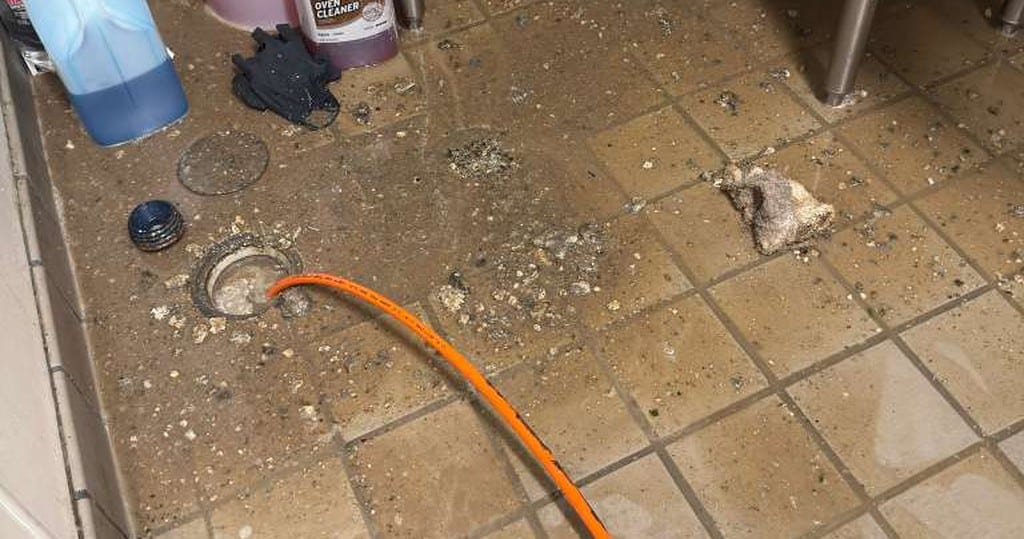
Your grease trap keeps backing up because pumping only empties the trap container itself. If the discharge line past the trap is narrowing, if the trap is too small or installed backward, or if your cleaning schedule does not match your kitchen’s daily output, the backup always returns. The trap might be completely clean, but the underlying problem is located somewhere else in the plumbing system.
What Your Grease Interceptor Is Actually Doing
Your grease interceptor performs one primary job: it slows down wastewater so gravity can separate its components. Fats, oils, and grease, collectively known as FOG, float to the top of the tank, while food solids sink to the bottom.
The clean water situated in the middle flows out smoothly to the municipal sewer. Internal baffles slow the water flow so this separation process can work effectively.
| Feature | Grease Trap | Grease Interceptor |
|---|---|---|
| Location | Indoors, under a sink or in the floor | Outdoors, underground |
| Capacity | 10 to 500 gallons | 500 to 5,000 gallons and more |
New to grease traps? Our guide to restaurant grease trap problems covers the early signs to watch out for.
7 Reasons Your Grease Trap Keeps Backing Up
A backup that returns after pumping has a cause the pump truck did not fix.
| Reason | What Happens | Fix |
|---|---|---|
| Schedule Does Not Match Output | A quarterly service schedule on a busy commercial kitchen that requires monthly service. | Ask your pumping company to match the pumping frequency to your actual FOG output. |
| Trap Installed Backward | Inlet and outlet are reversed, preventing proper grease separation. Industry data shows this occurs in about one in four restaurants. | Correcting the orientation is an installation job and your grease trap service handles this, not a cleaning crew. |
| Trap Too Small | Kitchen water flow exceeds the rated gallons per minute capacity of the trap. | Sizing and installing a larger trap is your trap installer’s job, we handle the drain and sewer lines connected to it. |
| Line Past the Trap is Narrowing | Escaped grease builds up in downstream pipes while the main trap unit looks clean. | Hydro-jet the outlet lines to clear accumulated grease. |
| Pump-Out Left Solids Behind | Heavy bottom solids remain in the tank, causing the trap to refill and clog much faster. | Ask your pumping service to scrape and clean the tank fully at every pump-out. |
| Chemicals or Enzymes Misused | Emulsified grease passes straight through the trap. Harsh caustic products can also damage stainless steel walls. | Avoid harsh chemical emulsifiers; rely on mechanical trapping. |
| Lines Never Maintained | Only the grease trap is serviced while the connecting sewer lines are never jetted or inspected. | Add hydro-jetting and camera inspections to your maintenance plan. |
When Jetting and a Camera Inspection Are the Real Fix
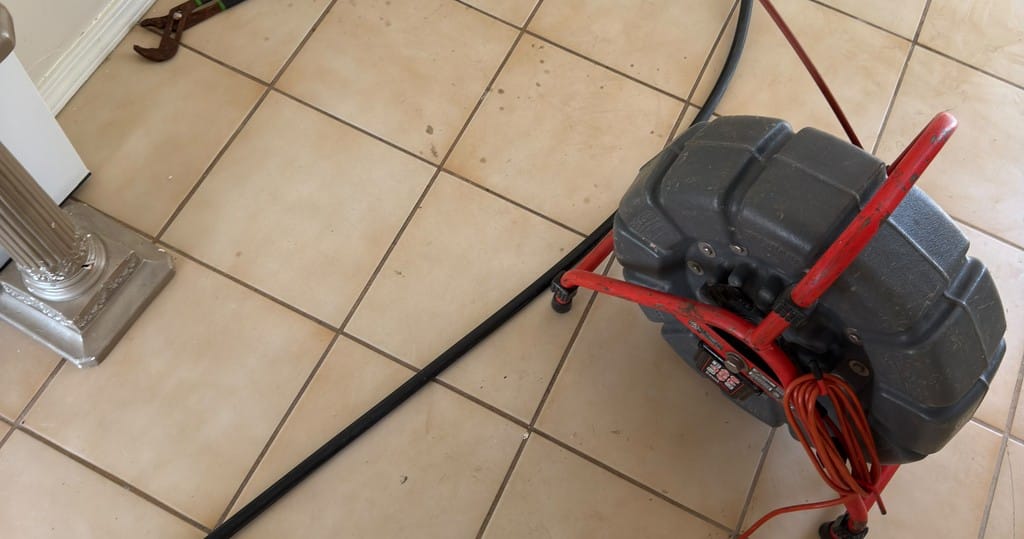
If your grease trap is pumped on schedule and the backup still returns, the problem is in the plumbing line, not the trap. A sewer camera inspection shows exactly where the line narrows and whether the pipe has structural damage.
Hydro jetting in Van Nuys scours the entire pipe wall clean, whereas traditional snaking only punches a hole through the grease mat. Jetting restores the full inner diameter of the pipe. A commercial kitchen that keeps backing up needs a camera and a jetter, not another routine pump-out.
If your kitchen in Van Nuys or anywhere in Los Angeles keeps backing up after pumping, book a camera inspection with LEV Plumbing & Jetting. We show you the video footage first, then we clear the line.
Frequently Asked Questions
Why does my kitchen sink back up even after the grease trap was emptied?
When your kitchen sink overflows despite an empty grease trap, the blockage is located further down the discharge line. Routine pumping only clears the contents inside the interceptor tank itself. Grease mist and solid particles that escape the tank coat the walls of the downstream pipes over time, narrowing the line and causing wastewater to push back up into your kitchen sinks.
How do I tell if my commercial grease trap is installed backward?
A grease trap installed backward will cause continuous kitchen line backups and immediate foul odors. You can verify the installation by checking the internal baffles and flow directional arrows stamped on the unit. The inlet side must connect to your kitchen fixture drains to receive heavy incoming flow, while the outlet side with the main baffle connects directly to the facility sewer line.
How much fat, oil, and grease is allowed in a grease trap before it fails?
Under the industry standard 25 percent rule, a grease trap fails to function properly when combined fats, oils, grease, and settled food solids occupy more than 25 percent of the total liquid depth. Once waste exceeds this limit, water moves through the tank too fast for gravity separation, forcing raw grease straight out into city sewer lines.
What is the difference between snaking and hydro jetting a restaurant grease line?
Snaking uses a steel cable to punch a small hole through a grease clog to restore temporary drainage, but it leaves thick grease layers stuck to the pipe walls. Hydro jetting uses high-pressure water streams to scrub the entire inner pipe wall clean, removing all hardened FOG buildup and restoring the line to its original full diameter.
Why does my grease interceptor smell terrible even when it is not overflowing?
Persistent grease trap odors occur when food solids sit at the bottom of the tank and rot, producing hydrogen sulfide gas. Odors also escape when rubber lid gaskets wear out, cleanout caps are left loose, or air vent lines become blocked. Regular scraping of bottom solids during pump-outs and inspecting lid seals keeps sewer gases contained.