
Ficus and Indian laurel fig cause the most sewer line damage in the San Fernando Valley. Their roots are aggressive, travel far, and chase moisture straight into old clay and cast iron pipes. California sycamore, eucalyptus, magnolia, pepper tree, carrotwood, and liquidambar follow close behind.
Planting thirsty trees requires careful spacing, keeping them 20 to 30 feet away from a sewer line, while willow trees require up to 50 feet of clearance.
Key Takeaways
- Ficus and Indian laurel fig are the Valley’s worst offender species, followed by sycamore, eucalyptus, and magnolia.
- Tree roots enter through leaking joints or cracks, growing into a thick mat that traps household waste.
- Seven clear warning signs indicate root intrusion, ranging from slow-draining fixtures to lingering sewer odors.
- Mechanical root cutting provides temporary relief because roots regrow, making pipe lining and replacement the permanent solutions.
- Always plant thirsty tree species 20 to 30 feet away from sewer laterals, and extend willow spacing up to 50 feet.
Which Trees Cause the Most Sewer Line Damage?
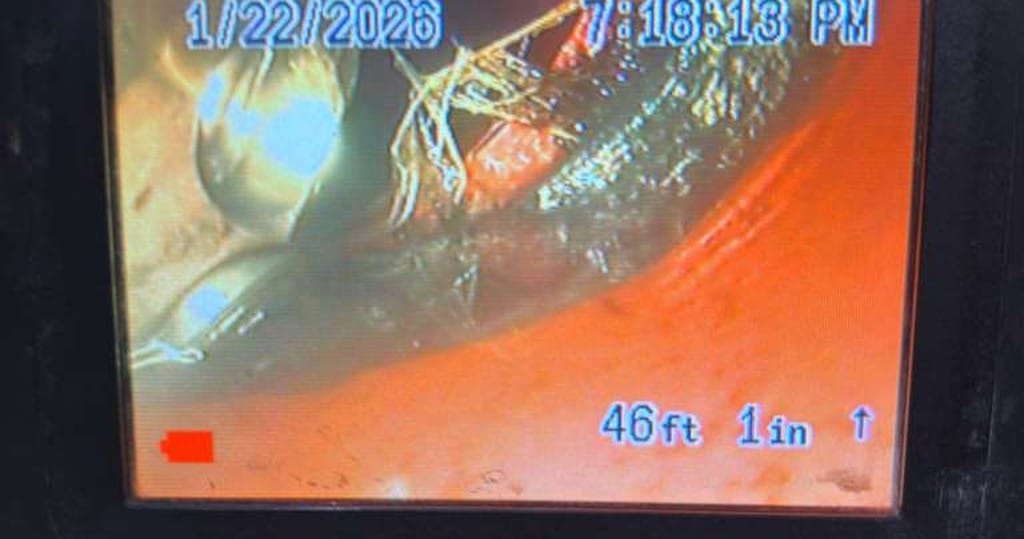
Ficus and Indian laurel fig cause the most sewer line damage across the San Fernando Valley. Their roots are exceptionally aggressive, traveling long distances to chase moisture directly into aging clay tile and cast iron pipes.
California sycamore, eucalyptus, magnolia, pepper tree, carrotwood, and liquidambar follow close behind in causing structural damage. Any thirsty tree planted near an aging sewer lateral poses a continuous risk to household plumbing.
The Valley’s Worst Trees for Sewer Lines
| Tree & Risk Level | Why It Is a Problem | Where It Grows in the Valley |
|---|---|---|
| Ficus / Indian Laurel Fig Highest Risk | Aggressive roots travel far and invade clay pipe joints | Van Nuys Blvd, Sepulveda Blvd, Tarzana, Encino |
| California Sycamore / London Plane High Risk | Floodplain species; thirsty roots hunt for pipes | Sherman Oaks hillsides, Encino |
| Eucalyptus High Risk | Aggressive, moisture-seeking root systems | Across the Valley |
| Magnolia High Risk | Strong roots in apartment and yard laterals | Valley streets and yards |
| Pepper Tree Medium to High | Fast-growing roots invade older laterals | Valley street trees |
| Carrotwood Medium to High | Street tree roots find joints in clay laterals | Valley street trees |
| Liquidambar (Sweetgum) Medium Risk | Roots seek out clay joints in older pipes | Sherman Oaks hillsides |
| Willow Medium Risk | Roots spread 2 to 3 times the canopy width, up to 50 feet | Low areas, large yards |
7 Warning Signs of Tree Roots in Your Sewer Line
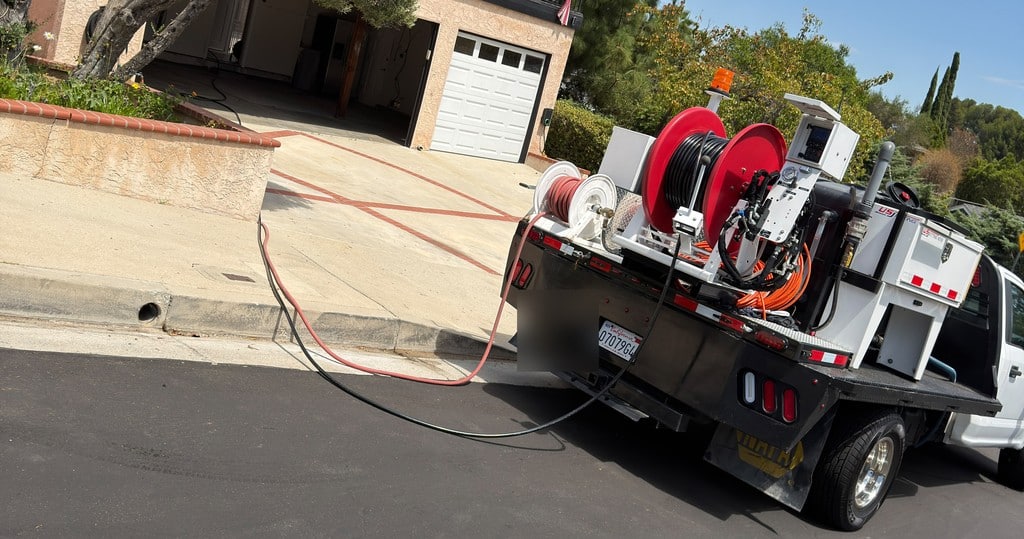
While a single slow drain usually indicates a simple localized clog, multiple slow drains occurring together point directly to tree root intrusion deep within the main sewer line:
- Every drain in the house runs slow simultaneously.
- The toilet gurgles whenever a nearby sink or shower drains.
- A persistent sewer smell hangs around indoor drains or in the yard.
- One specific strip of lawn grass grows noticeably greener and faster.
- The exact same drain clogs repeatedly just weeks after being cleared.
- Wastewater or sewage rises out from the main sewer cleanout.
- A ground-floor toilet or bathtub backs up before any upper fixtures.
Remember that tree roots inside a sewer line do not clear themselves over time.
How to Remove Tree Roots and What Lasts
A sewer camera inspection shows the root mat, the entry joints, and whether the pipe is cracked.
| Method | What It Does | How Long It Lasts |
|---|---|---|
| Root Cutting | A blade cuts the roots out of the pipe | Months (Roots regrow) |
| Hydro Jetting | High pressure water cuts roots and flushes the line clean | Longer than mechanical cutting |
| Pipe Lining (CIPP) | A resin liner hardens inside the old pipe, jointless and smooth | 50 years or more (Roots cannot re-enter) |
| Pipe Replacement | Replaces the damaged lateral with a brand-new line | Full service lifetime |
Cutting buys time. Hydro jetting in Van Nuys buys more time and restores full flow. Lining and replacement end the problem.
How to Prevent Tree Roots in Your Sewer Line
The International Society of Arboriculture recommends planting standard trees at least 10 to 20 feet away from any sewer line. Aggressive root species require 20 to 30 feet of distance, while high-moisture species like willow need up to 50 feet. Installing a root barrier, which is a buried solid sheet that deflects growing roots downward away from utilities, offers additional protection. Safe landscape choices for California yards include dogwood, Western redbud, crabapple, Amur maple, and Japanese maple. Always verify where your underground lateral runs before planting new trees.
Frequently Asked Questions
How do I know if tree roots are in my sewer line or if it is just a simple drain clog?
A simple drain clog usually affects only one fixture, like a single clogged sink or shower. When tree roots invade your main sewer line, multiple fixtures across your home slow down at the same time, toilets gurgle when water drains elsewhere, and sewage can back up into ground-floor bathtubs. A quick video pipe inspection by a local plumber confirms whether roots are causing the blockage.
Why do San Fernando Valley homes have so many tree root sewer leaks?
Many San Fernando Valley neighborhoods feature older homes built between the 1940s and 1970s with clay tile or cast iron sewer laterals. Over decades, ground movement, dry Valley soil, and summer heat cause microscopic cracks at pipe joints. Large local trees like Ficus and Sycamore naturally extend roots toward these moist cracks, breaking into the line to access water.
Will chemical root killers clear thick tree roots out of my sewer pipes?
Chemical root killers foam up inside the pipe to kill fine hair roots and slow down new growth, but they cannot dissolve large, dense root mats already blocking your main sewer line. Chemical treatments work best as a temporary preventative maintenance tool after a plumber has mechanically cleared or hydro-jetted the line.
Who pays for sewer line root damage near the street in the San Fernando Valley?
In most San Fernando Valley cities, including Los Angeles municipal areas, the homeowner is legally responsible for maintaining and repairing the entire sewer lateral. This responsibility extends from the house all the way to the connection point at the main city sewer line in the street, even if the offending tree is planted on city sidewalk property.
How much does trenchless pipe lining cost compared to digging up a yard for tree roots?
Trenchless CIPP pipe lining generally saves homeowners 30% to 50% in total costs compared to traditional open-trench replacement. While the pipe lining material itself is specialized, trenchless repair avoids the expensive costs of digging up driveways, removing mature landscaping, and rebuilding hardscapes across your San Fernando Valley yard.