
Older homes in Van Nuys and Sherman Oaks carry a kind of character new construction simply cannot replicate, but the plumbing behind those walls is often decades past its intended lifespan.
Signs of aging pipes in old home properties rarely show up as one dramatic event. They show up gradually, in small changes most homeowners brush off until the problem is already expensive. Here is what to actually watch for, and what to do about it before a slow warning turns into a burst pipe.
Key Takeaways
- Pipe age alone does not mean replacement. Material and condition matter more.
- Rusty or brown water often points to corrosion inside older plumbing.
- Corroded galvanized pipes can restrict water flow and reduce pressure.
- Low pressure across multiple fixtures deserves a closer plumbing inspection.
- Recurring sewer backups may point to problems beyond the home’s supply pipes.
- Tree roots enter damaged sewer lines through cracks and loose joints.
- A professional inspection helps determine between repair, replacement, or repiping.
Signs of Old Pipes in Home: What to Watch For
Watch for rusty water, declining pressure, recurring leaks, visible corrosion, and unusual pipe noises. Multiple warning signs together often indicate aging plumbing that needs inspection.
Rusty Water From Faucet Causes
Rusty or brown water often comes from corrosion inside older galvanized or metal pipes. If discoloration keeps returning, inspect the plumbing to find the source.
Low Water Pressure Old Home
Low pressure across several faucets or showers often points to restricted aging supply pipes. Corrosion and mineral buildup inside galvanized pipes reduce water flow.
How to Identify Galvanized Pipes
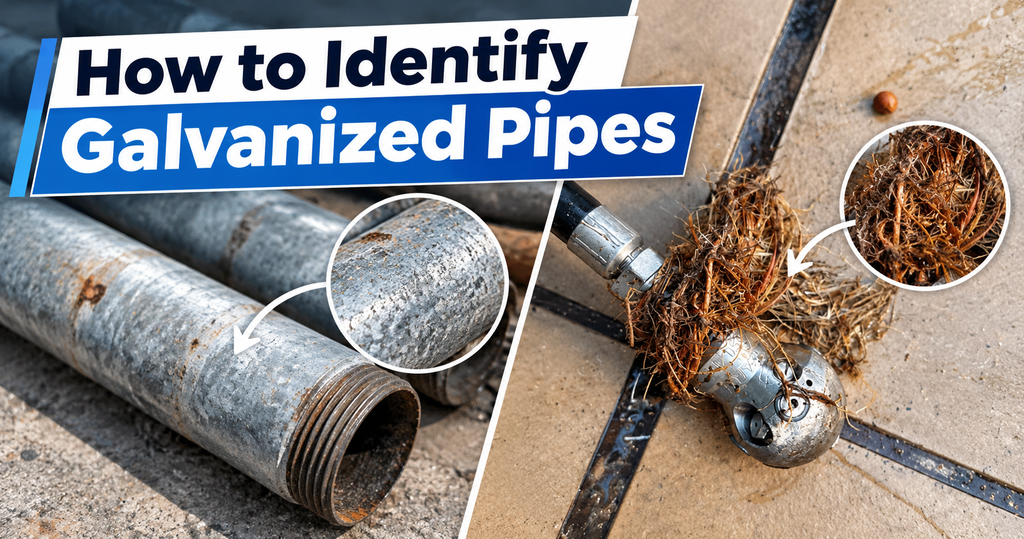
Identifying galvanized pipe does not require any special tools in most cases. Look at any exposed pipe in a garage, basement, or utility closet. Galvanized pipe has a dull gray color, often with visible threading at the joints rather than the smooth soldered connections seen on copper.
A simple magnet test can help confirm it, since a magnet will stick to galvanized steel but not to copper or most plastic piping.
If your home was built before 1960 and still has its original plumbing, there is a strong chance at least some galvanized pipe remains in the system, even if sections have been partially replaced over the years.
How Long Do Galvanized Pipes Last?
Galvanized steel pipe typically lasts between 40 and 50 years before corrosion becomes a serious concern, though internal deterioration often begins well before any external signs appear.
Compare that to copper, which can last 50 years or more, or modern PEX piping, rated for 40 to 50 years with far less susceptibility to corrosion.
Tree Roots and Sewer Line Issues in Old Homes
Tree roots affect underground sewer pipes, not incoming water lines, by creeping through cracked pipe joints toward moisture. This leads to constant drain backups, gurgling toilets, and slow drains.
Knowing the difference prevents unnecessary repairs. Low water pressure or rusty water means a water line issue, while repeated sewage backups point to a sewer line failure.
If sewage is backing up right now, an Emergency Drain Plumber Sherman Oaks can run a quick video camera inspection to locate the blockage. Based on the pipe damage, solutions range from root clearing and spot repairs to trenchless pipe lining or full replacement.
Frequently Asked Questions
How can I tell if my old home has galvanized pipes?
Check any exposed pipe for a dull gray color and threaded joints, and try a magnet test, since a magnet will stick to galvanized steel but not to copper.
Why is the water rusty or brown in my older house?
Rust colored water usually comes from corrosion inside aging galvanized pipes, where rust particles break loose and travel through the water supply as the pipe deteriorates from the inside.
Is low water pressure a sign of aging pipes?
Yes, when the drop in pressure affects multiple fixtures throughout the home rather than just one, it typically means mineral buildup and corrosion are narrowing the inside of the pipes.
When should I repipe instead of just repairing leaks?
If leaks keep appearing in different locations, water quality has noticeably declined, or a camera inspection shows widespread internal corrosion, a full repipe is usually more cost effective than repeated repairs.
Do tree roots damage sewer lines in older homes?
Yes, tree roots are drawn to moisture escaping through small cracks in aging clay or cast iron sewer lines, and once inside, they grow quickly and cause blockages.
What should I do first if I suspect aging pipes?
A camera inspection paired with hydro jetting is a smart first step, since it clears buildup, restores flow, and gives a clear picture of the pipe’s actual condition before deciding whether repair or replacement makes sense.
Can aging pipes affect water quality?
Yes, corroding pipes can introduce rust, sediment, and even a metallic taste into your water supply, which is one of the clearer signs that the plumbing system needs a closer look.
Ready to Check the Condition of Your Pipes?
If your Van Nuys or Sherman Oaks home is showing any of these signs, waiting rarely makes the problem smaller. As a trusted Drain & Sewer Company Los Angeles homeowners rely on, we offer camera inspections and hydro jetting to give you a clear, honest answer about what your pipes actually need. Call today to schedule an assessment.